What does a hydraulic training course cover?
A hydraulic training course covers the fundamentals of how hydraulic systems operate, along with an introduction to system components and safe working practices. Participants typically learn how to interpret schematics, understand how fluids behave under pressure, and recognise key parts such as pumps and valves. System design and troubleshooting may also be covered, helping learners to develop practical skills.
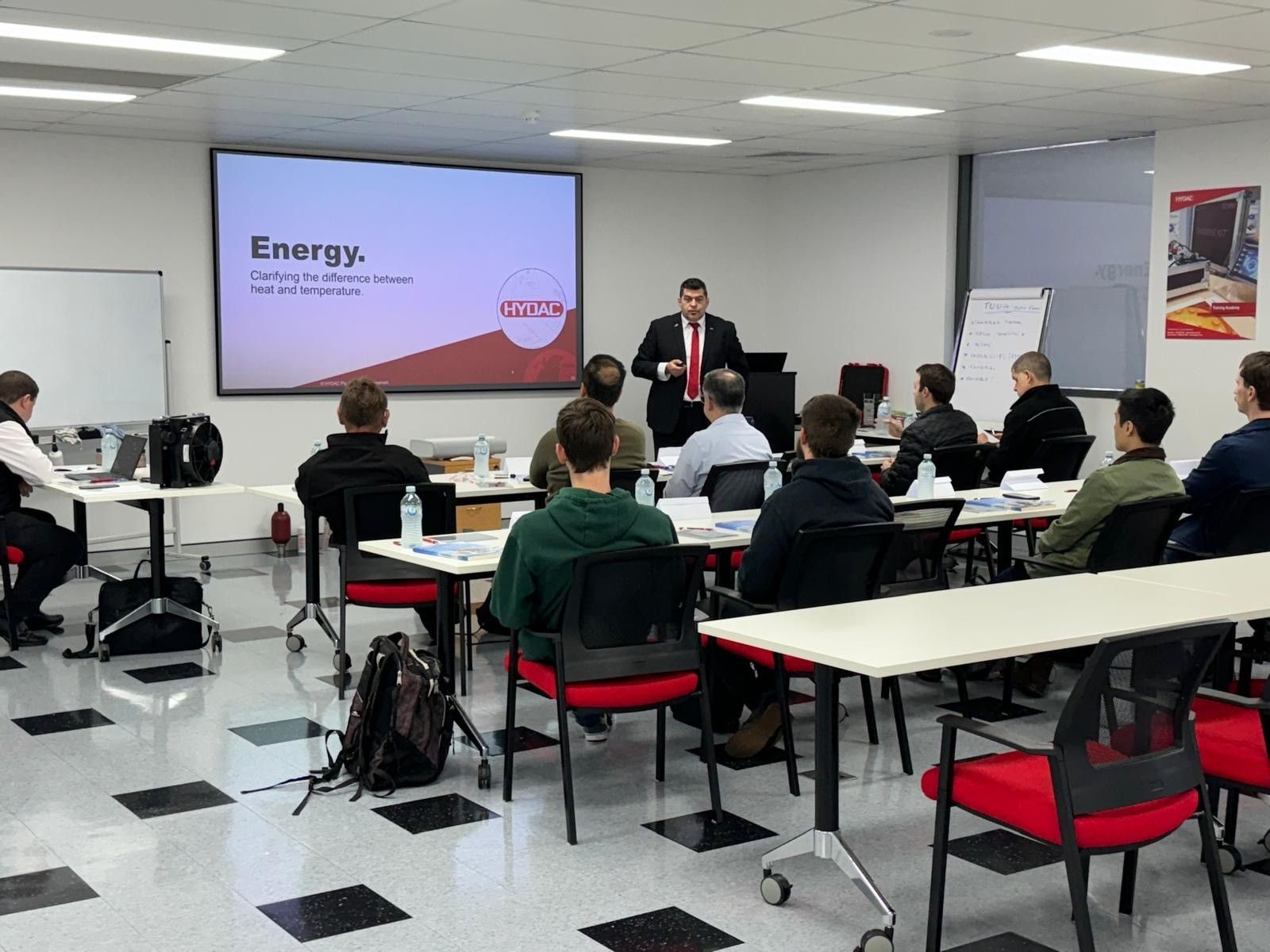
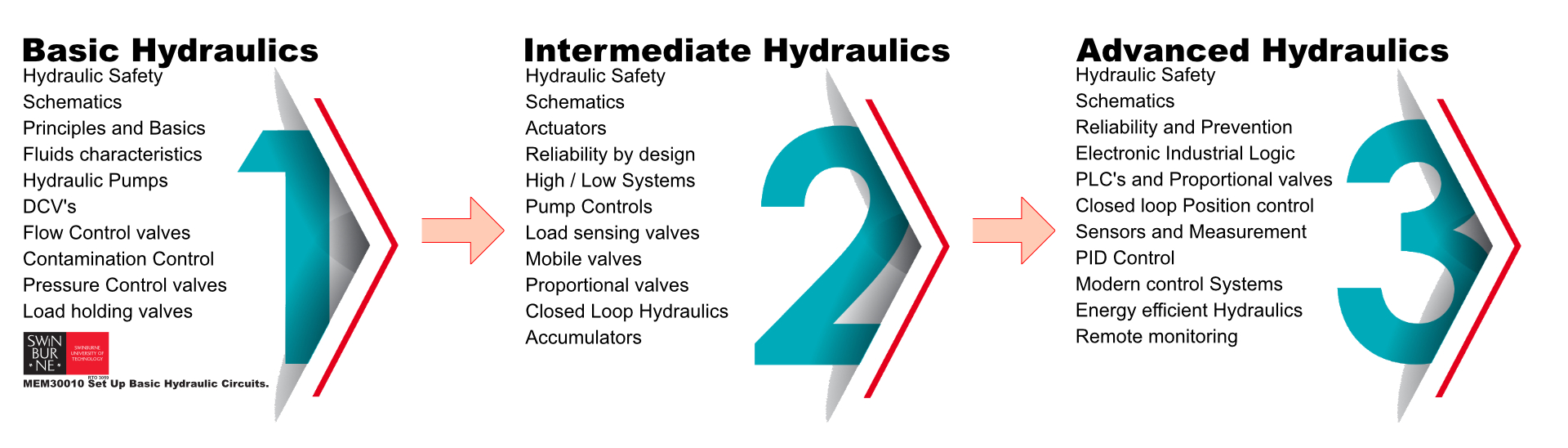
HYDAC’s hydraulic training is structured across three levels to suit different experience levels. Our entry-level course introduces hydraulic principles, safety and key components, while our intermediate and advanced courses build on this with hands-on work involving circuits and electronic controls. Our courses also include detailed textbooks and practical exercises, giving participants a solid understanding of system behaviour and the confidence to apply their knowledge in the field.
What skills are needed for hydraulic technicians?
Hydraulic technicians need a combination of technical understanding and practical ability to work effectively with fluid power systems. A strong grasp of how hydraulic systems operate, including the function of key components, is essential. They should be able to read and interpret schematics, identify faults and carry out maintenance tasks with confidence. Good problem-solving skills and a focus on safety are also important.
At HYDAC, our hydraulic training is designed to build skills progressively. Our Basic Hydraulics 1 course introduces core principles and safety awareness for those new to the field. As skills develop, our intermediate and advanced hydraulics courses add practical exercises, helping technicians apply their knowledge in complex, real-world scenarios.
What hydraulic troubleshooting topics are covered during the training?
Hydraulic troubleshooting focuses on helping participants identify and resolve faults within hydraulic systems. It also covers how systems operate under normal conditions, allowing for issues to be recognised quickly when performance changes. Learners develop skills in reading schematics and tracing faults through a system, in addition to building knowledge around safety awareness and contamination control.
At HYDAC, troubleshooting skills are developed across each stage of training. Our Basic Hydraulics 1 course introduces system components, schematics and safe work practices, giving participants a solid starting point. In Intermediate Hydraulics 2, the focus moves to interpreting circuits and understanding how components interact during faults. This is expanded on in our Advanced Hydraulics 3 course, which deals with more complex issues in modern applications.
How long does hydraulic training take?
Many programs combine theory with practical learning, allowing participants to develop skills at a steady pace while applying what they learn to real-world systems.
HYDAC’s hydraulic training is structured across three levels, each delivered as a four-day course (32 hours). The Basic Hydraulics 1 course provides a starting point for those new to hydraulics. The Intermediate Hydraulics 2 course builds on this with more detailed system knowledge and practical exercises. For those progressing further, our Advanced Hydraulics 3 course focuses on more complex systems. This staged approach allows participants to develop their skills progressively.
Is hydraulic training suitable for beginners?
Yes, hydraulic training can be suitable for beginners, especially when courses are designed to start with the basics. Beginners can learn to recognise parts like pumps and valves, read simple schematics and understand how systems operate. These courses are often structured to build confidence gradually, making them a solid starting point for those with little or no prior experience.
HYDAC’s Basic Hydraulics 1 course is specifically tailored for beginners, with no perquisites. It runs over four days and covers essential topics such as system principles, components and safety awareness, in addition to teaching participants how to identify components and explain their functions. This course also includes a detailed textbook and offers a pathway to nationally recognised competency.
Do hydraulic courses include hands-on training?
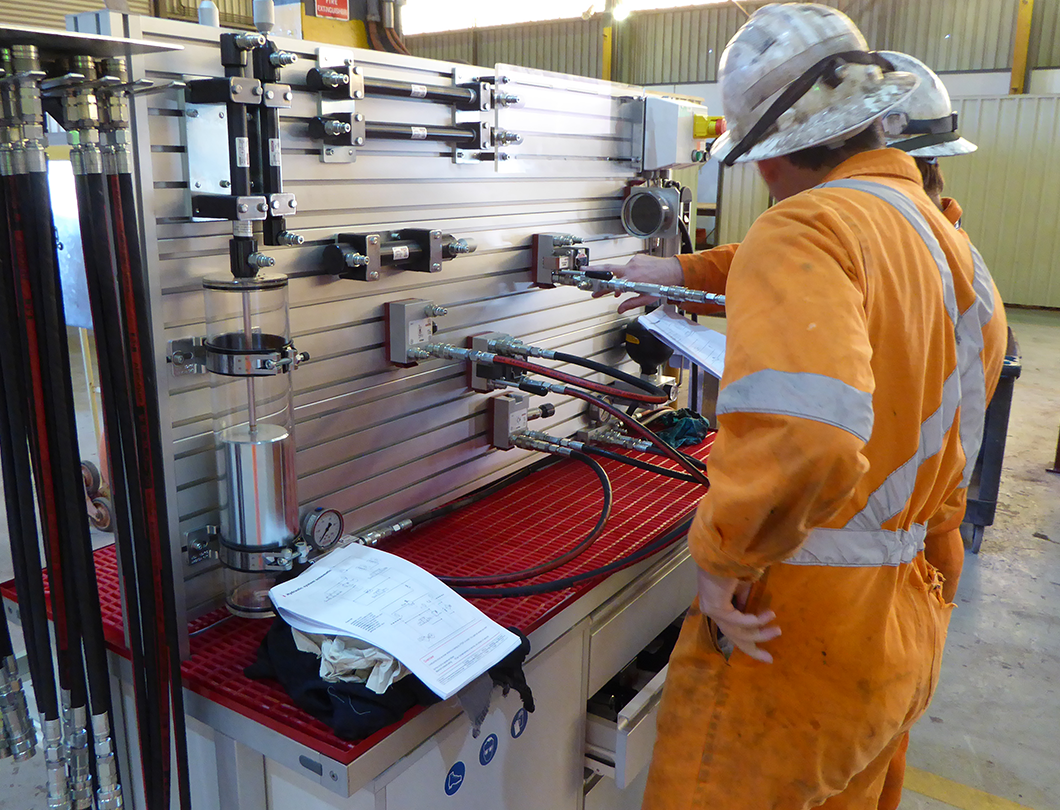
Yes,our hydraulic courses include hands-on training, especially at intermediate and advanced levels. Practical learning allows participants to apply theory in real scenarios, helping them better understand how components interact within a system. This might involve working with valves, pumps or control systems, as well as interpreting circuits and troubleshooting faults. Hands-on experience can improve confidence and make it easier to transfer knowledge into the workplace.
At HYDAC, practical training becomes a strong focus as you progress. While our Basic Hydraulics 1 course builds foundational knowledge, our intermediate and advanced courses include structured practical exercises. Participants work directly with components such as proportional valves, pumps and electronic controls, strengthening applied skills and imparting a deeper understanding of modern hydraulic systems.
Is hydraulic training available on-site or customised for companies?
Yes, hydraulic training can often be delivered on-site or tailored to suit a company’s specific needs. Teams often benefit from learning within their own working environment, using familiar equipment and real-world scenarios. Customised training may focus on particular systems or operational challenges, helping staff build practical knowledge that directly applies to their day-to-day tasks.
At HYDAC, training is typically delivered through structured courses such as our Basic, Intermediate and Advanced Hydraulics courses. These are usually run at dedicated training locations and follow a set curriculum. If you have specific training requirements, you’re welcome to discuss your requirements with us to explore available options.
What qualifications do you get from hydraulic training?
Hydraulic training can lead to certificates that demonstrate your understanding of hydraulic systems and safe work practices. Depending on the course level, participants can gain practical skills in building circuits, interpreting schematics and maintaining equipment. Some training programs also align with nationally recognised standards, giving you formal credentials that can support career progression in different areas.
With HYDAC, participants in the Basic Hydraulics 1 course can achieve the MEM30010 Set Up Basic Hydraulic Circuits unit. Through our partnership with Swinburne University of Technology, this unit can be nationally recognised, adding formal value to your training. Our structured pathway through Basic, Intermediate and Advanced courses also helps build deeper technical capability through hands-on learning.
How much does hydraulic training cost in Australia?
On average, a four-day hydraulic training course can range from around $2,500 to $3,000, with prices often excluding GST.
Check our training page to find out the cost for each training course. Each four-day course includes comprehensive textbooks and hands-on learning. The Basic Hydraulics 1 course also offers a pathway to a nationally recognised unit through Swinburne University of Technology, giving participants added value alongside practical skills development.
What is the best hydraulic training course in Australia?
The best hydraulic training course depends on your experience level and the type of systems you work with. A quality course should cover core principles, system components, safety and real-world applications while also offering practical learning. Beginners will benefit most from foundational training, while experienced professionals should look for more advanced topics like system optimisation and electronic controls.
HYDAC offers a structured training pathway that caters to all levels. Our Basic Hydraulics 1 course provides a strong introduction to system components, with no prerequisites required. For those progressing further, our Intermediate Hydraulics 2 and Advanced Hydraulics 3 courses build on this knowledge with hands-on exercises, deeper system analysis and exposure to electro-hydraulic controls.